

Resources and insights
Our Blog
Explore insights and practical tips on mastering Databricks Data Intelligence Platform and the full spectrum of today's modern data ecosystem.



Lakeflow Connect Free Tier: $35/Day Back in Your Budget
Databricks' permanent Lakeflow Connect free tier delivers 100 DBUs per workspace per day — covering up to 100 million records of ingestion at no additional compute cost. For enterprise teams running multiple workspaces, that's over $255,000 in avoided annual costs. This post breaks down the economics, architecture, and what it means for teams still paying a third-party ETL tax.

You Pay for the Complexity of Your Move From On-Prem to Cloud
Moving data from on-prem to cloud shouldn't require 5+ systems. Discover why complexity costs you money and how Zerobus Ingest simplifies data pipelines.

5 Reasons You Should Be Using LakeFlow Jobs as Your Default Orchestrator
External orchestrators can account for nearly 30% of Databricks’ job costs. Discover five compelling reasons why LakeFlow Jobs should be your default orchestration layer: from Infrastructure as Code to SQL-driven workflows.
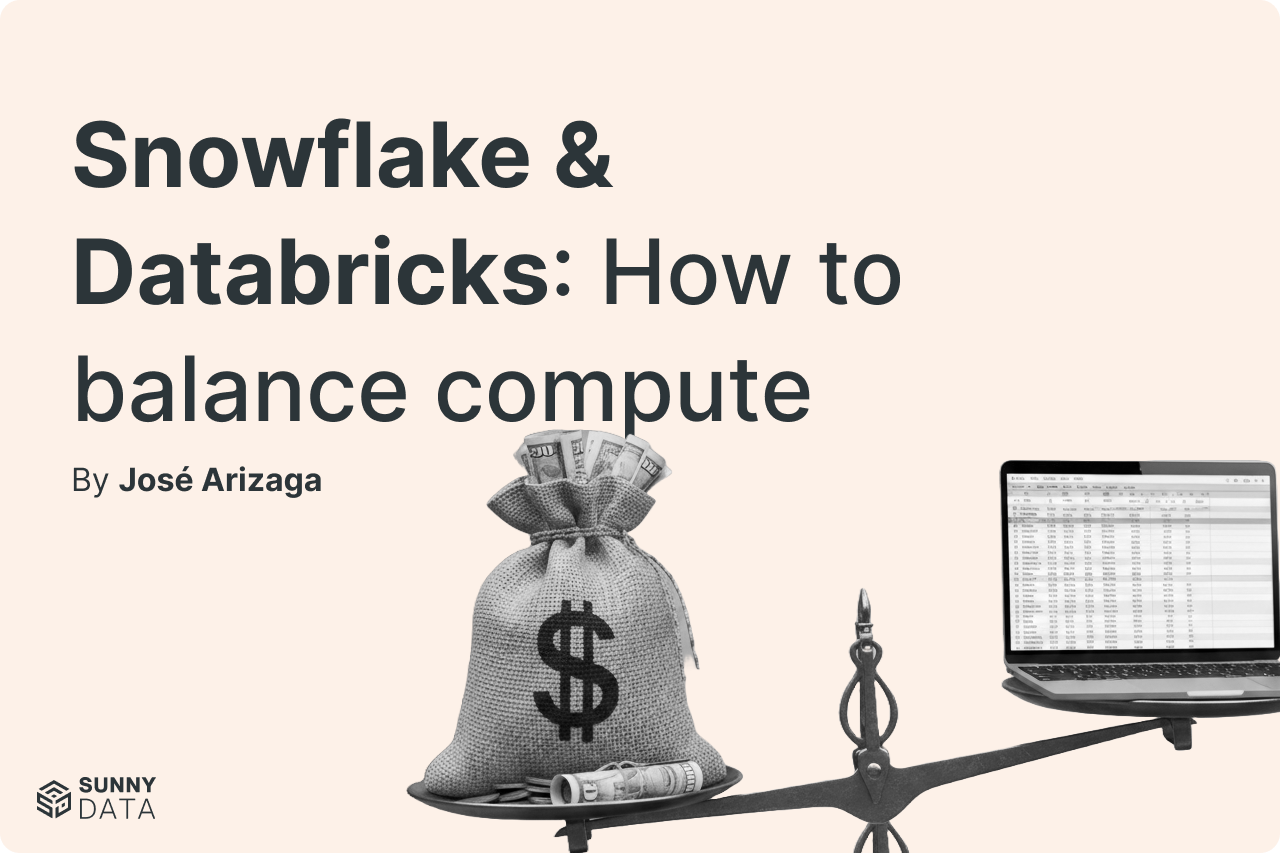
Snowflake and Databricks: How to balance compute
Compare Snowflake and Databricks compute models. Learn scaling strategies, cost optimization tips, and when to use auto-suspend, multi-cluster, and autoscaling.

Purpose for your All-Purpose Cluster
Learn how to configure Databricks all-purpose clusters to reject scheduled jobs, forcing teams to use cost-effective job clusters. Simple setup, big savings.