

Resources and insights
Our Blog
Explore insights and practical tips on mastering Databricks Data Intelligence Platform and the full spectrum of today's modern data ecosystem.


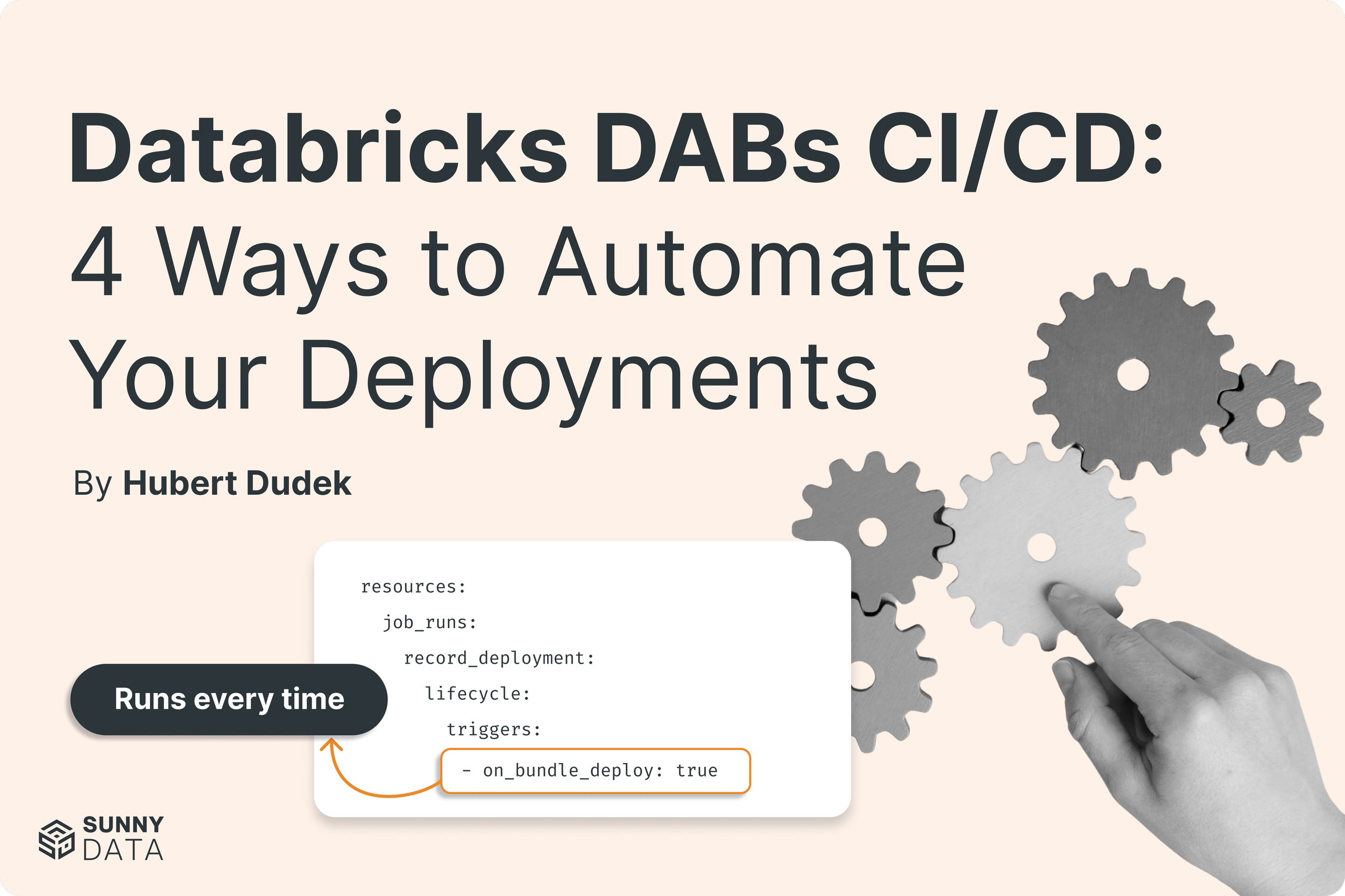
Databricks DABs CI/CD: 4 Ways to Automate Your Deployments
Every CI/CD pipeline eventually needs something to run after deployment: initial setup, config syncs, validation checks. job_runs in Databricks Asset Bundles handles all of it natively, and you can use it to block a production update when validation fails.

5 Databricks Patterns That Look Fine Until They Aren't
Five common Databricks coding patterns — including undocumented API calls, manual SparkSession instantiation, and hardcoded Spark configs — that pass code review but fail silently in serverless environments or during platform migrations. For each anti-pattern, this post explains why it breaks and shows the correct native Databricks approach using DABS, the Databricks SDK, and dynamic job parameters.
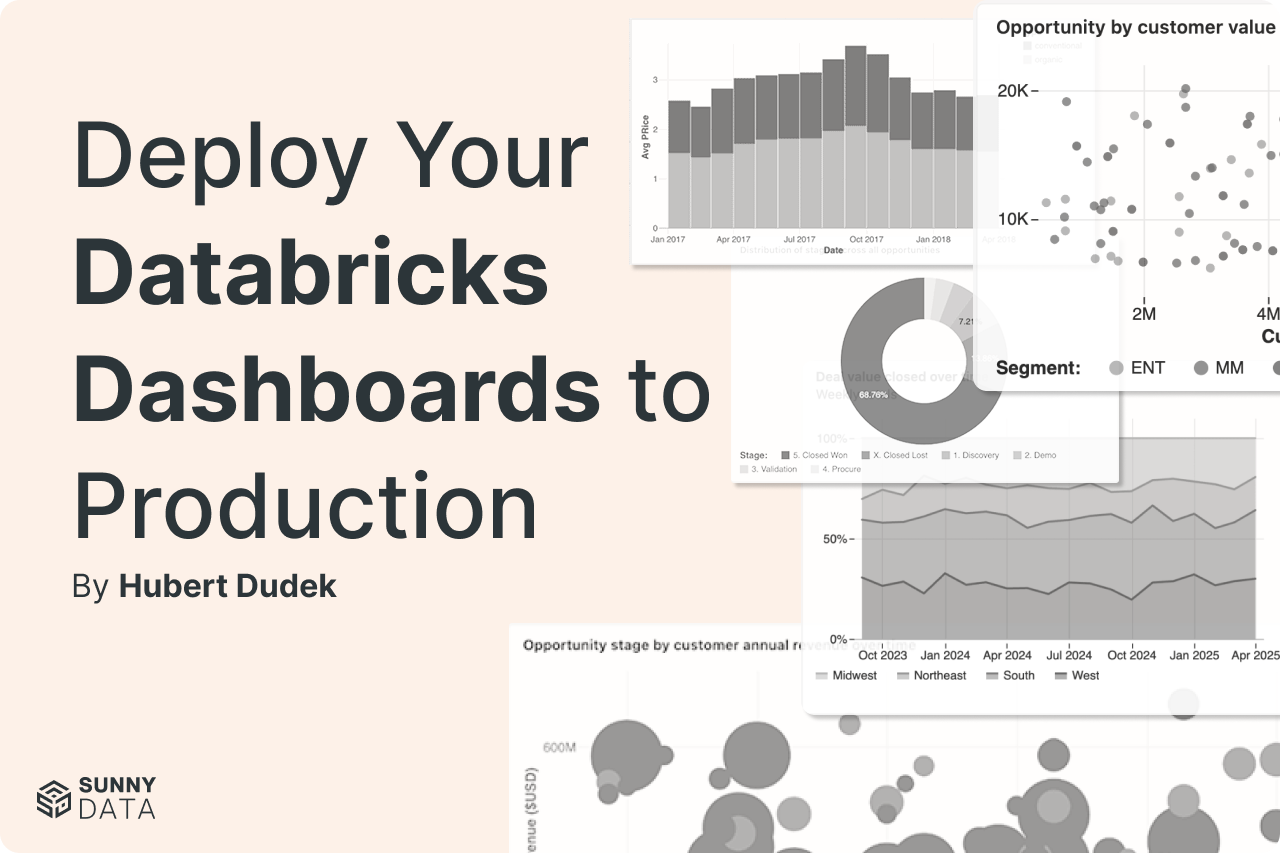
Deploy Your Databricks Dashboards to Production
Stop deploying Databricks dashboards manually. Learn how to use Git, Asset Bundles, and CI/CD for reliable, reproducible dashboard deployments across environments.

5 Reasons You Should Be Using LakeFlow Jobs as Your Default Orchestrator
External orchestrators can account for nearly 30% of Databricks’ job costs. Discover five compelling reasons why LakeFlow Jobs should be your default orchestration layer: from Infrastructure as Code to SQL-driven workflows.
DABs: Referencing Your Resources
Databricks bundle lookups failing with "does not exist" errors? Resource references solve timing issues and create strong dependencies. Complete guide with examples.
Managing Databricks CLI Versions in Your DAB Projects
Prevent Databricks deployment failures caused by CLI version conflicts. Step-by-step guide to version management in DAB projects with CI/CD automation.