

Resources and insights
Our Blog
Explore insights and practical tips on mastering Databricks Data Intelligence Platform and the full spectrum of today's modern data ecosystem.


Enforcing Enterprise Naming Conventions in Databricks: The Agentic Way
Naming conventions only work if they're enforced — and a Confluence page nobody reads isn't enforcement. This post walks through using Databricks Workspace Skills to make naming rules executable in Genie Code, then scaling that to a catalog-wide audit agent built with Databricks Apps and DABS. The result is automated, repeatable governance that runs without requiring engineers to opt in.
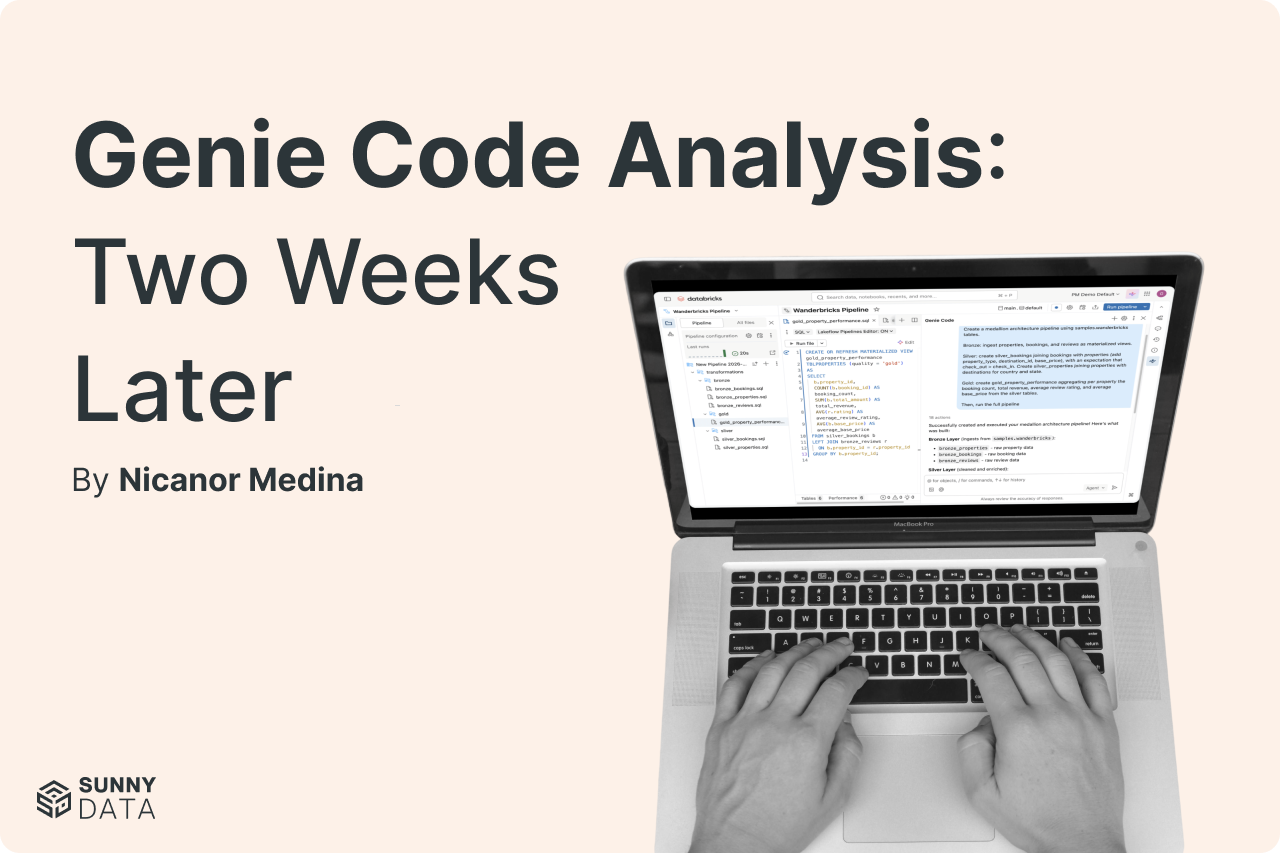
Genie Code Analysis: Two Weeks Later
Databricks Genie Code hit a 77.1% task success rate in production data science workflows — more than double what general-purpose coding agents achieve. But that performance is entirely conditional on the quality of your Unity Catalog metadata. SunnyData's two-week evaluation breaks down what works, what doesn't, and the governance layer you need before you go live.

Defining Table Relationships in Databricks Genie
Master data relationships in Databricks Genie with and without foreign keys. Complete guide to using Unity Catalog constraints and defining custom joins for better AI insights.

Keeping Up With Agent Bricks
Complete Databricks Agent Bricks review and tutorial. Explore the potential of this Databricks tool by building an AI agent for financial analysis using RAG, multi-agent systems, and PDF parsing.