

Resources and insights
Our Blog
Explore insights and practical tips on mastering Databricks Data Intelligence Platform and the full spectrum of today's modern data ecosystem.


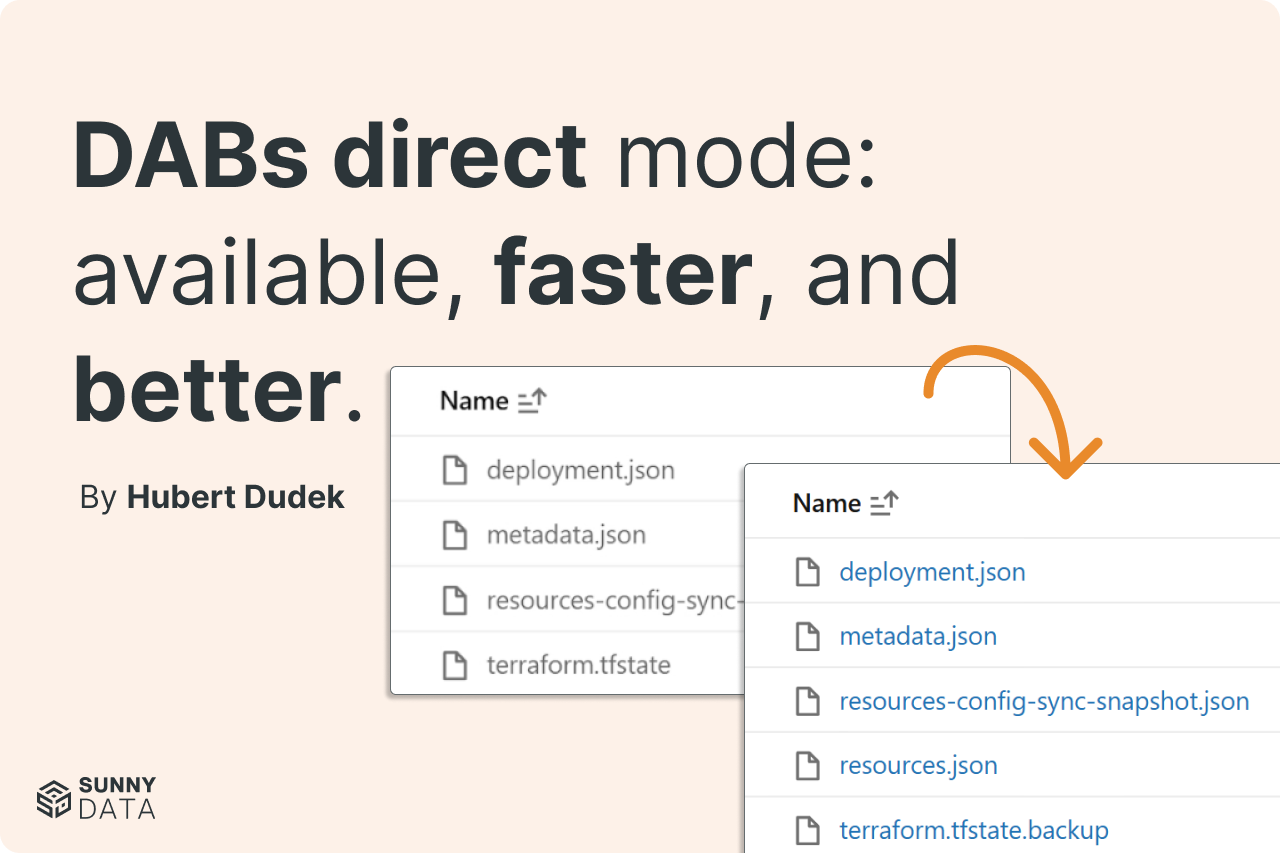
DABs direct mode: available, faster, and better.
Databricks Asset Bundles direct mode is now GA, and it's already the default for bundles created from the workspace, with full CLI default rollout on August 26, 2026. By removing the Terraform dependency, direct mode cuts deployment time by up to 40%, replaces opaque state with human-readable JSON, and unlocks resources like instance pools and Genie Agents that Terraform-gated releases used to delay.

The Translator’s Gone: Inside Databricks' Direct Engine
Databricks just replaced the engine behind DABs deployment. Here's what Direct Engine changes, why it matters, and how to migrate your existing bundles before Terraform support goes away.

Global Job Parameters, Thanks To DABs Mutators
Declarative Automation Bundles mutators let you define job parameters once in a central config file and inject them into every job automatically at deploy time — no more copy-pasting catalog names, schema paths, and environment variables across your bundle. This post walks through a working implementation with full code examples.

Enforcing Enterprise Naming Conventions in Databricks: The Agentic Way
Naming conventions only work if they're enforced — and a Confluence page nobody reads isn't enforcement. This post walks through using Databricks Workspace Skills to make naming rules executable in Genie Code, then scaling that to a catalog-wide audit agent built with Databricks Apps and DABS. The result is automated, repeatable governance that runs without requiring engineers to opt in.
How to Pass Terraform Outputs to Databricks’ DABS
As teams migrate infrastructure definitions into Declarative Automation Bundles, Terraform still owns the Azure layer — Key Vaults, resource groups, networking. This post walks through a clean, CI/CD-ready pattern for passing Terraform outputs directly into bundle variable overrides, eliminating manual config steps and the environment drift that follows them.